
Sumba – Where Wild Landscapes Meet Living Traditions
Far beyond Bali’s familiar coastline lies an island of rolling savannahs, traditional villages, dramatic beaches, ancient stone tombs, and communities whose traditions remain deeply connected to the land.
Sumba is not a destination that reveals itself all at once.
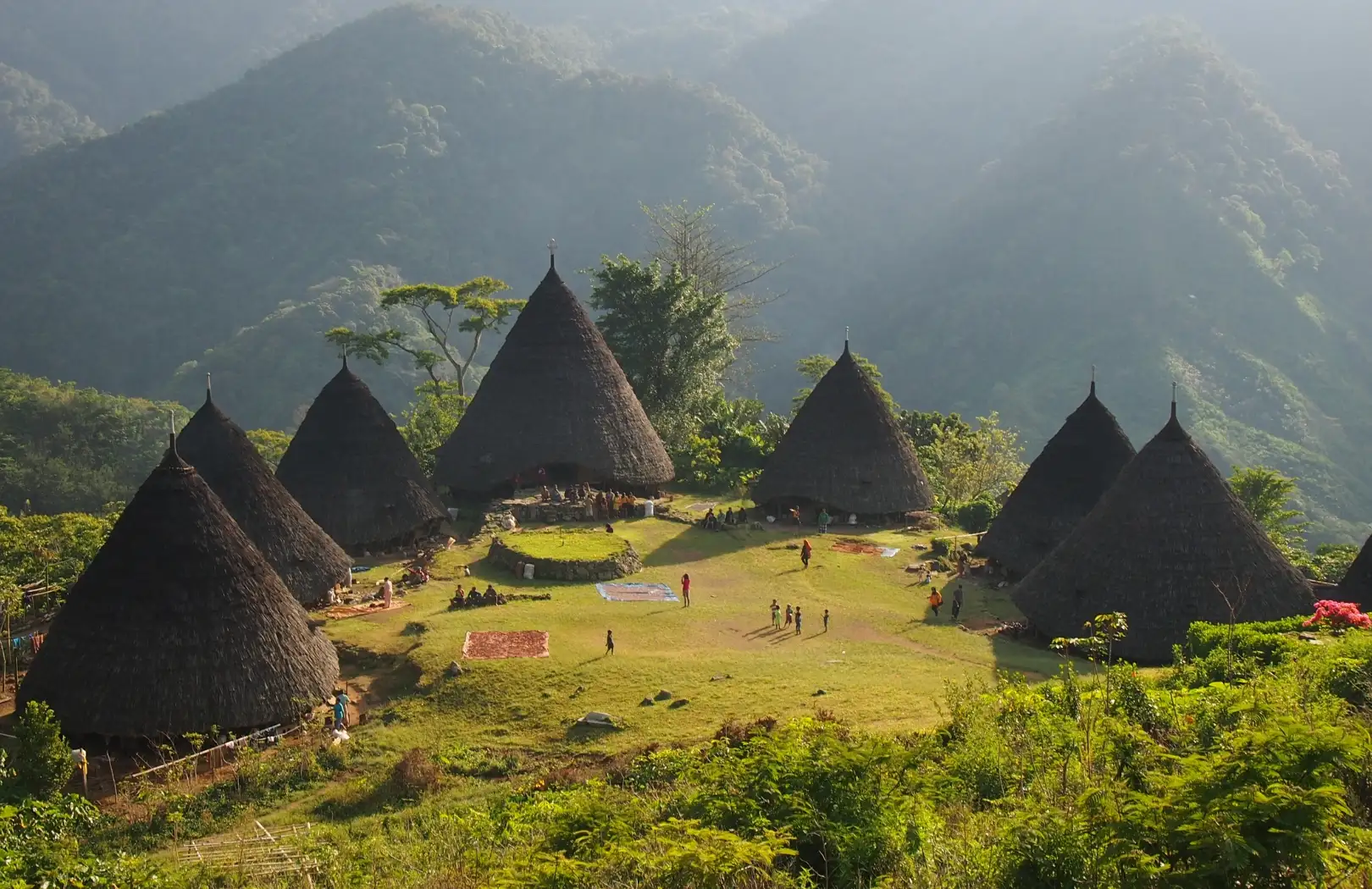
The island stretches across wide landscapes where the scenery can shift from green hills and rice fields to golden grasslands, rugged coastlines, waterfalls, and quiet villages. Traditional houses with distinctive high thatched roofs rise above settlements, horses remain an important part of local life, and handwoven ikat carries stories through patterns and color.
What makes Sumba remarkable is not simply its beauty.
It is the way landscape, culture, and daily life continue to exist together.
For travelers willing to slow down and travel deeper, Sumba offers one of Indonesia’s most distinctive island journeys.
Cross the Rolling Savannahs of East Sumba

One of Sumba’s defining landscapes can be found across the wide hills of the eastern part of the island.
Here, open grasslands stretch toward the horizon, changing appearance with the seasons.
During wetter months, hills can become intensely green. As the dry season progresses, the same landscapes transform into shades of gold and brown, creating the cinematic scenery for which Sumba has become increasingly recognized.
Bukit Wairinding is one of the island’s best-known places to experience these landscapes. Its rolling savannah provides wide views across the surrounding hills, with the atmosphere becoming especially striking as the light softens toward sunset.
But Wairinding is only one part of the experience.
Driving through East Sumba can be just as memorable as arriving at a viewpoint. Long roads cross open country, horses appear beside the landscape, and small settlements interrupt vast stretches of hills.
In Sumba, the journey itself often becomes one of the highlights.
Step Inside Sumba’s Traditional Villages
The landscapes may first capture your attention, but Sumba’s traditional villages reveal another side of the island entirely.
Across different regions, traditional settlements preserve distinctive architecture characterized by tall, thatched-roof houses. Many villages are also closely associated with megalithic tombs and ancestral traditions that remain culturally important today.
In Southwest Sumba, Ratenggaro Village creates one of the island’s most striking scenes.
Traditional houses with remarkably high roofs stand close to ancient stone tombs, while the village sits beside a dramatic coastal landscape near the mouth of the Waiha River. Indonesia Travel highlights Ratenggaro for both its traditional architecture and megalithic heritage.
Elsewhere, villages such as Praijing provide opportunities to learn about local architecture, traditions, and everyday community life.
These are living communities rather than museum displays.
Visitors should approach them respectfully, follow local guidance, ask before photographing residents, and remember that homes, sacred areas, and ancestral sites remain part of daily life.
The experience becomes much more meaningful when the visit is treated as an opportunity to understand rather than simply observe.
Discover the Spiritual Heritage of Sumba
Ancestral traditions continue to influence many aspects of Sumbanese culture.
The indigenous Marapu tradition remains particularly important in parts of the island and is reflected in ceremonies, traditional villages, ancestral relationships, megalithic tombs, and community customs.
Perhaps the most internationally recognized expression of Sumba’s ceremonial culture is Pasola.
Held in parts of western Sumba, Pasola involves skilled horsemen riding at speed and throwing wooden spears as part of a wider sequence of traditional ceremonies connected with agriculture and community beliefs. The events are generally associated with February and March, although timing and locations vary according to traditional calendars and local decisions.
Pasola should not be understood simply as a performance created for visitors.
It carries cultural and ceremonial meaning for participating communities.
For travelers fortunate enough to experience it, respecting local rules and understanding the context behind the tradition is an essential part of the journey.
Swim in the Turquoise Waters of Weekuri Lagoon

Sumba’s dramatic landscapes are not limited to hills and villages.
In Southwest Sumba, Weekuri Lagoon offers a completely different experience.
Surrounded by coral rock and vegetation, this saltwater lagoon is known for clear blue-green water connected to the sea through gaps in the surrounding reef. Its sheltered setting creates a striking contrast with the powerful ocean nearby.
Travelers can spend time beside the water, enjoy the surrounding views, and swim when local conditions permit.
What makes Weekuri particularly memorable is the transition between landscapes.
A journey through villages and dry countryside suddenly opens toward clear turquoise water enclosed by rock formations.
Nearby Mandorak Beach continues the contrast.
Here, the coastline becomes more dramatic, with strong ocean waves moving between rugged rock formations. The area is known more for its scenery than swimming because conditions can be powerful.
Together, Weekuri and Mandorak show just how quickly Sumba can change character.
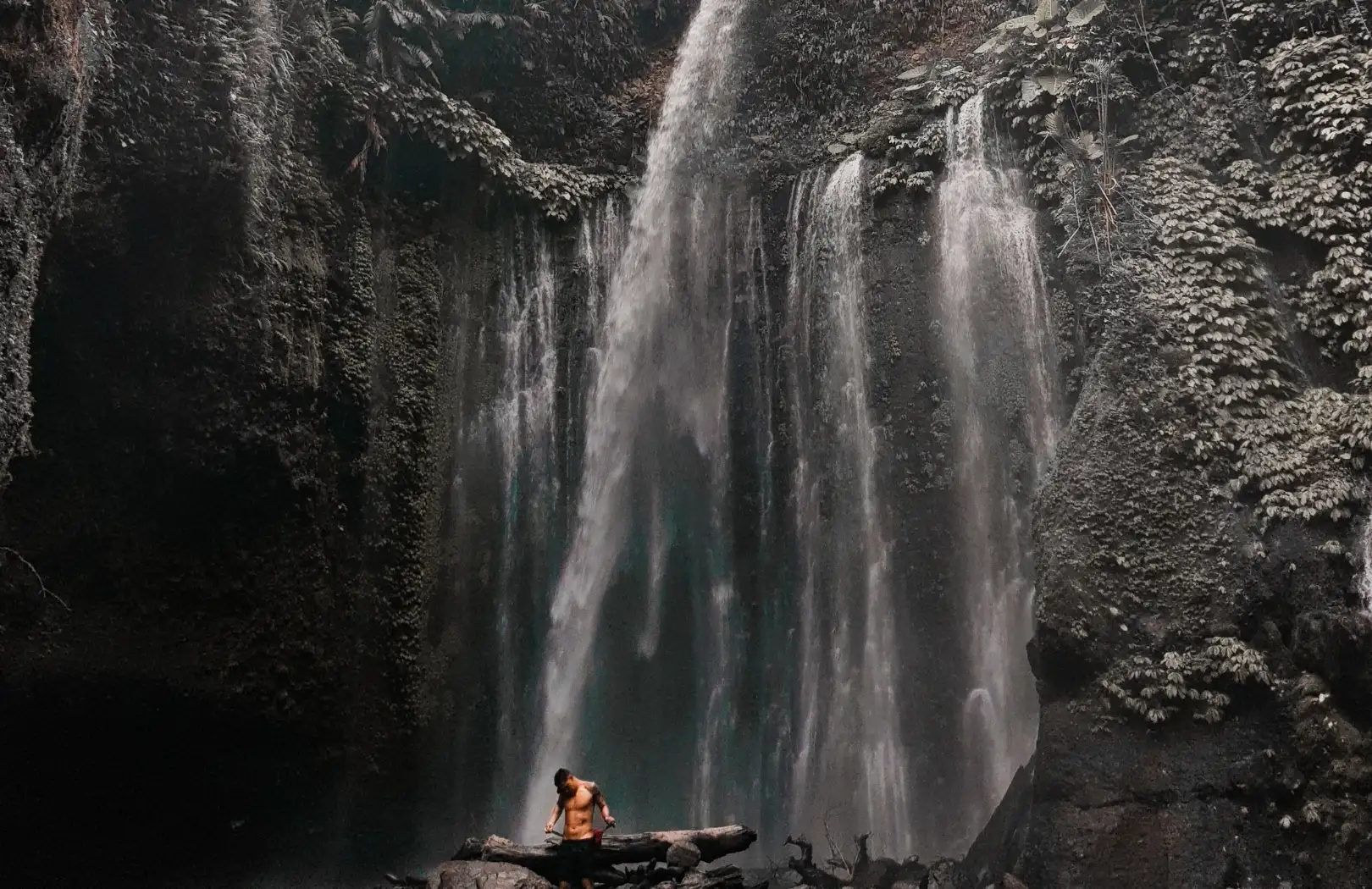
Find Waterfalls Hidden Beyond the Main Roads
Some of Sumba’s most rewarding natural experiences require leaving the main road behind.
Waterfalls can be found in different areas of the island, often surrounded by forest, valleys, or rural landscapes.
Lapopu Waterfall, located within the wider Manupeu Tanah Daru and Laiwangi Wanggameti conservation landscape, is among the better-known examples. Water descends through a broad natural setting into pools below, creating a peaceful contrast to Sumba’s open savannah scenery.
East Sumba offers other waterfall environments, including Waimarang and Tanggedu, each with distinctive rock formations and pools.
Getting there can sometimes involve uneven roads or walking trails.
That is part of exploring Sumba.
The island often asks for a little effort before revealing the landscape you came to see.
Follow the Coast Toward Walakiri
As evening approaches in East Sumba, one particular stretch of coastline becomes especially memorable.
Walakiri Beach is known for its unusual mangrove trees standing in shallow tidal areas. As the tide changes and the sun begins to set, their twisting silhouettes create one of the island’s most recognizable coastal scenes.
The attraction here is less about activity and more about atmosphere.
Walk across the sand.
Wait for the light to change.
Watch the horizon shift from bright afternoon into softer evening colors.
Like many experiences in Sumba, the moment works best when it is not rushed.
Discover the Art of Sumba Ikat

Culture in Sumba is also carried through cloth.
The island is widely known for traditional ikat weaving, particularly around East Sumba. Villages near Waingapu such as Prailiu, Kwangu, and Lambanapu have long been associated with the craft. Traditional textiles feature distinctive motifs that can include horses, animals, human figures, and other symbolic forms.
The weaving process can be complex and time-consuming, involving traditional techniques and, in some cases, natural dyes.
Seeing this work directly offers a different understanding of the island.
What initially appears to be a beautiful textile can also represent skill passed between generations, cultural identity, family traditions, and local stories.
For travelers interested in meaningful souvenirs, purchasing directly from local weavers can also create a more personal connection to the craft.
An Island Shaped by Horses
Few images are as closely associated with Sumba as horses moving across open grasslands.
Horses have a longstanding cultural presence on the island and appear throughout local traditions, ceremonies, textiles, transportation history, and contemporary island imagery.
Their importance is particularly visible during Pasola, but horses are part of a much wider relationship between communities and the landscape.
Travel through rural Sumba and you may see them beside roads, across fields, or near villages.
Combined with the island’s broad savannahs, they contribute to the sense that Sumba belongs to a very different visual world from many other Indonesian islands.
Take Time Between West and East Sumba
Sumba is larger than it may appear on a map.
Its attractions are spread across different regencies, and journeys between western and eastern areas can take time.
That distance should not necessarily be treated as an inconvenience.
Western and southwestern Sumba offer places such as Ratenggaro, Weekuri, Mandorak, traditional villages, and strong connections with ceremonial culture.
Central sections introduce additional rural landscapes and megalithic heritage.
East Sumba shifts toward expansive savannahs, ikat-producing communities, waterfalls, distinctive beaches, and landscapes around Waingapu.
Trying to experience the entire island too quickly can mean spending more time moving than discovering.
Sumba is better approached as a journey.
Several days allow the landscapes to change gradually and create room for spontaneous encounters along the road.
Experience Sumba Beyond the Photograph

Sumba is an exceptionally photogenic destination.
But its value extends far beyond the photographs travelers bring home.
Traditional villages are communities.
Ikat is not simply decoration.
Pasola is not simply entertainment.
Megalithic tombs are not simply landmarks.
And dramatic landscapes are often connected to the livelihoods and traditions of people who have lived among them for generations.
Traveling respectfully makes a significant difference.
Use local guides when appropriate.
Follow customs when entering villages or ceremonial spaces.
Ask permission before photographing people.
Support local crafts and businesses.
And allow communities to define how their traditions are shared.
The most memorable journeys through Sumba often come from understanding the stories behind what you see.
Highlights with Antik Hospitality
Traditional Villages & Megalithic Heritage
Discover distinctive Sumbanese architecture, ancestral sites, stone tombs, and living communities where traditions remain part of everyday life.
Weekuri Lagoon & Southwest Coast
Swim beside the turquoise waters of Weekuri and explore the dramatic coastal landscapes surrounding Southwest Sumba.
Wairinding & Sumba Savannahs
Travel through sweeping hills and open grasslands that change dramatically between the green and dry seasons.
Waterfalls & Wild Landscapes
Venture beyond the main roads to discover waterfalls, natural pools, valleys, and remote corners of the island.
Ikat, Horses & Local Culture
Experience some of the traditions that define Sumba, from handwoven textiles and village life to the island’s deep connection with horses.
Why Sumba with Antik Hospitality?
Sumba rewards travelers who give it time.
Distances are longer, experiences are spread across the island, and many of its most meaningful places are best discovered with local knowledge and thoughtful planning.
With Antik Hospitality, your Sumba journey can be shaped around the experience you want.
Explore traditional villages and cultural heritage.
Build a photography journey around savannahs, horses, and dramatic coastlines.
Combine waterfalls, lagoons, and beaches with local communities and craft traditions.
Or travel slowly from west to east and allow the island to reveal itself gradually.
From accommodation and private transportation to local guides and personalized itineraries, we help connect the different parts of the journey while leaving room for the unexpected moments that often make Sumba unforgettable.
Because Sumba is not simply a destination to see.
It is a place to understand, experience, and remember.
Discover Sumba with Antik Hospitality and journey through one of Indonesia’s most extraordinary cultural landscapes.